The potential of Eimeria parasites as stay vaccine vectors has been reported with profitable genetic manipulation on a number of species like E. tenella, E. mitis and E. necatrix. Amongst seven Eimeria species infecting chickens, E. acervulina is a extremely prevalent, reasonably pathogenic species. Thus, it’s worthwhile for the examine of transfection and to be used as a possible as vaccine vector. On this examine, a plasmid containing expression cassette with enhanced yellow fluorescent protein (EYFP), pink fluorescent protein (RFP) and 12 copies of extracellular area of H9N2 avian influenza virus M2 (M2e) protein was used for the transfection.
Nucleofected sporozoites have been inoculated into birds by wing vein. Recombinant E. acervulina oocysts with 0.1% EYFP+ and RFP+ populations have been collected from the feces of the inoculated birds. The fluorescent price of transgenic parasites reached over 95% after 9 successive propagations with a pyrimethamine choice in vivo and fluorescent-activated cell sorting (FACS) of progeny oocysts.
The expression of M2e within the transgenic parasites (EaM2e) was confirmed by Western blot and its cytoplasm localization in sporozoites was displayed by an oblique immunofluorescent assay (IFA). In the meantime, we discovered that the fecundity of EaM2e was equal to that of untamed kind E. acervulina (EaWT). Taken collectively, the steady transfection of E. acervulina was efficiently established. Future research will deal with whether or not transgenic E. acervulina can function a stay vaccine vector.
Pathological evaluation and genetic characterization of the primary outbreak H5N8 subtype avian influenza virus remoted from wild swan in Shandong, China
In January 2021, an outbreak of H5N8 subtype avian influenza was recognized from wild mute swans (Cygnus olor) in an overwintering web site situated inside Yellow River Delta Nature Reserve in Shandong, China for the primary time. We sequenced the HA and NA genome segments of the virus, named as A/mute swan/Shandong/1/2021 (H5N8) and explored the genetic characterization and comparative phylogenetic evaluation to trace its origin. The wild swans previous to dying confirmed nervous indicators accompanied with twisted neck.
The key pathological adjustments of the center, lung, trachea, kidney, spleen, and glandular abdomen have been hemorrhage, and in depth necrotic lesions within the liver and pancreas have been additionally noticed. Additional evaluation of the HA and NA phylogenetic timber generated by H5N8 strains remoted worldwide revealed that the isolate have a carefully genetic relationship with H5N8 subtype AIV from just lately remoted in Korea and Japan from 2020 to 2021, suggesting the potential position of mute swans within the world dissemination of H5N8 subtype AIVs alongside the migration routes.
Subsequently, enhanced energetic surveillance in wild and home birds is required to watch the introduction and unfold of H5N8 subtype AIV by migratory birds to be able to lower the danger of H5N8 outbreaks. This text is protected by copyright. All rights reserved.
Reverse Transcription Recombinase Polymerase Amplification Assay for Speedy Detection of Avian Influenza Virus H9N2 HA Gene
The H9N2 subtype of avian influenza A virus (aIAV) is circulating amongst birds worldwide, resulting in extreme financial losses. H9N2 cocirculation with different extremely pathogenic aIAVs has the potential to contribute to the rise of latest strains with pandemic potential. Subsequently, speedy detection of H9 aIAVs an infection is essential to regulate virus unfold. A qualitative reverse transcription recombinase polymerase amplification (RT-RPA) assay for the detection of aIAV subtype H9N2 was developed.
All outcomes have been in comparison with the gold commonplace (real-time reverse transcription polymerase chain response (RT-PCR)). The RT-RPA assay was designed to detect the hemagglutinin (HA) gene of H9N2 by testing three pairs of primers and a probe. A serial focus between 106 and 100 EID50 (50% embryo infective dose)/mL was utilized to calculate the analytical sensitivity. The H9 RT-RPA assay was extremely delicate because the lowest focus level of an ordinary vary at one EID50/mL was detected after 5 to eight min. The H9N2 RT-RPA assay was extremely particular as nucleic acid extracted from H9 unfavorable samples and from different avian pathogens weren’t cross detected.
The diagnostic sensitivity when testing scientific samples was 100% for RT-RPA and RT-PCR. In conclusion, H9N2 RT-RPA is a speedy delicate and particular assay that simply operable in a transportable machine for discipline prognosis of aIAV H9N2.
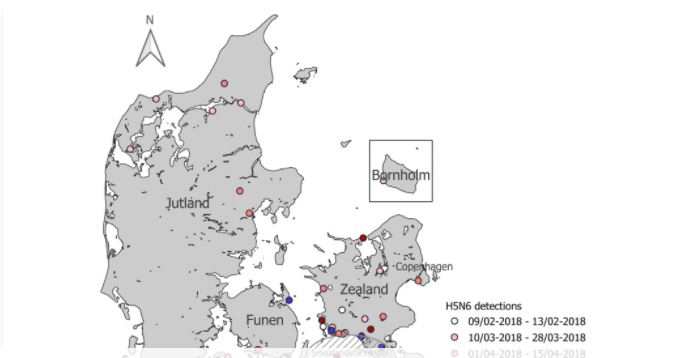
Molecular Characterization of Extremely Pathogenic Avian Influenza Viruses H5N6 Detected in Denmark in 2018-2019
Starting in late 2017, extremely pathogenic avian influenza (HPAI) H5N6 viruses precipitated outbreaks in wild birds and poultry in a number of European nations. H5N6 viruses have been detected in 43 wild birds discovered lifeless all through Denmark. A lot of the Danish virus-positive lifeless birds have been discovered within the interval from February to April 2018.
Nevertheless, in contrast to the remainder of Europe, sporadic HPAI H5N6-positive lifeless wild birds have been detected in Denmark in July, August, September, and December 2018, with the final constructive fowl being present in January 2019. HPAI viruses weren’t detected in energetic surveillance of apparently wholesome wild birds. On this examine, we use full genome sequencing and phylogenetic evaluation to research the wild fowl HPAI H5N6 viruses present in Denmark.
The Danish viruses have been discovered to be carefully associated to these of latest HPAI H5N6 viruses detected in Europe. Their sequences shaped two clusters indicating that at the very least two or extra introductions of H5N6 into Denmark occurred. Notably, all viruses detected within the latter half of 2018 and in 2019 grouped into the identical cluster. The H5N6 viruses appeared to have been maintained undetected within the autumn 2018.
Major Hen and Duck Endothelial Cells Show a Differential Response to An infection with Extremely Pathogenic Avian Influenza Virus
Extremely pathogenic avian influenza viruses (HPAIVs) in gallinaceous poultry are related to viral an infection of the endothelium, the induction of a ‘cytokine storm, and extreme illness. In distinction, in Pekin geese, HPAIVs are not often endothelial tropic, and a cytokine storm isn’t noticed. Thus far, understanding these species-dependent variations in pathogenesis has been hampered by the absence of a pure tradition of duck and rooster endothelial cells.
Right here, we use our just lately established in vitro cultures of duck and rooster aortic endothelial cells to research species-dependent variations within the response of endothelial cells to HPAIV H5N1 an infection. We display that rooster and duck endothelial cells show a special transcriptional response to HPAI H5N1 an infection in vitro-with chickens displaying a extra pro-inflammatory response to an infection. As related observations have been recorded following in vitro stimulation with the viral mimetic polyI:C, these findings weren’t particular to an HPAIV H5N1 an infection.
 Avian Influenza Hemagglutinin Antibody |
|
3427-01mg |
ProSci |
0.1 mg |
EUR 523.7 |
|
|
|
Description: Avian Influenza Hemagglutinin Antibody: Influenza A virus is a major public health threat, killing more than 30, 000 people per year in the USA. Novel influenza virus strains caused by genetic drift and viral recombination emerge periodically to which humans have little or no immunity, resulting in devastating pandemics. Influenza A can exist in a variety of animals; however it is in birds that all subtypes can be found. These subtypes are classified based on the combination of the virus coat glycoproteins hemagglutinin (HA) and neuraminidase (NA) subtypes. During 1997, an H5N1 avian influenza virus was determined to be the cause of death in 6 of 18 infected patients in Hong Kong. There was some evidence of human to human spread of this virus, but it is thought that the transmission efficiency was fairly low. HA interacts with cell surface proteins containing oligosaccharides with terminal sialyl residues. Virus isolated from a human infected with the H5N1 strain in 1997 could bind to oligosaccharides from human as well as avian sources, indicating its species-jumping ability. |
Avian Influenza Hemagglutinin Antibody |
|
24276 |
SAB |
100ul |
EUR 479 |
Avian Influenza Hemagglutinin Antibody |
|
24276-100ul |
SAB |
100ul |
EUR 468 |
Avian Influenza Hemagglutinin Antibody |
|
24277 |
SAB |
100ul |
EUR 479 |
Avian Influenza Hemagglutinin Antibody |
|
24277-100ul |
SAB |
100ul |
EUR 468 |
Avian Influenza Hemagglutinin Antibody |
|
MBS151256-01mg |
MyBiosource |
0.1mg |
EUR 445 |
Avian Influenza Hemagglutinin Antibody |
|
MBS151256-5x01mg |
MyBiosource |
5x0.1mg |
EUR 1965 |
Avian Influenza Hemagglutinin Antibody |
|
MBS150485-01mg |
MyBiosource |
0.1mg |
EUR 445 |
Avian Influenza Hemagglutinin Antibody |
|
MBS150485-5x01mg |
MyBiosource |
5x0.1mg |
EUR 1965 |
Avian Influenza Hemagglutinin Antibody |
|
MBS9401705-01mL |
MyBiosource |
0.1mL |
EUR 495 |
Avian Influenza Hemagglutinin Antibody |
|
MBS9401705-5x01mL |
MyBiosource |
5x0.1mL |
EUR 2075 |
Avian Influenza Hemagglutinin Antibody |
|
MBS9404745-01mL |
MyBiosource |
0.1mL |
EUR 495 |
Avian Influenza Hemagglutinin Antibody |
|
MBS9404745-5x01mL |
MyBiosource |
5x0.1mL |
EUR 2075 |
 Avian Influenza Hemagglutinin 2 Antibody |
|
24449 |
SAB |
100ul |
EUR 479 |
Avian Influenza Hemagglutinin 2 Antibody |
|
24449-100ul |
SAB |
100ul |
EUR 468 |
 Avian Influenza Hemagglutinin 3 Antibody |
|
24450 |
SAB |
100ul |
EUR 479 |
Avian Influenza Hemagglutinin 3 Antibody |
|
24450-100ul |
SAB |
100ul |
EUR 468 |
 Avian Influenza Hemagglutinin 4 Antibody |
|
24451 |
SAB |
100ul |
EUR 479 |
Avian Influenza Hemagglutinin 4 Antibody |
|
24451-100ul |
SAB |
100ul |
EUR 468 |
 Avian Influenza Hemagglutinin 1 Antibody |
|
24454 |
SAB |
100ul |
EUR 479 |
Avian Influenza Hemagglutinin 1 Antibody |
|
24454-100ul |
SAB |
100ul |
EUR 468 |
 Avian Influenza A Hemagglutinin Antibody |
|
GWB-68DB90 |
GenWay Biotech |
0.1 mg |
Ask for price |
Avian Influenza Hemagglutinin 3 Antibody |
|
MBS151039-01mg |
MyBiosource |
0.1mg |
EUR 445 |
Avian Influenza Hemagglutinin 3 Antibody |
|
MBS151039-5x01mg |
MyBiosource |
5x0.1mg |
EUR 1965 |
Avian Influenza Hemagglutinin 1 Antibody |
|
MBS151143-01mg |
MyBiosource |
0.1mg |
EUR 445 |
Avian Influenza Hemagglutinin 1 Antibody |
|
MBS151143-5x01mg |
MyBiosource |
5x0.1mg |
EUR 1965 |
Avian Influenza Hemagglutinin 4 Antibody |
|
MBS151450-01mg |
MyBiosource |
0.1mg |
EUR 445 |
Avian Influenza Hemagglutinin 4 Antibody |
|
MBS151450-5x01mg |
MyBiosource |
5x0.1mg |
EUR 1965 |
Avian Influenza Hemagglutinin 2 Antibody |
|
MBS150283-01mg |
MyBiosource |
0.1mg |
EUR 445 |
Avian Influenza Hemagglutinin 2 Antibody |
|
MBS150283-5x01mg |
MyBiosource |
5x0.1mg |
EUR 1965 |
Avian Influenza Hemagglutinin 3 Antibody |
|
MBS9404749-01mL |
MyBiosource |
0.1mL |
EUR 495 |
Avian Influenza Hemagglutinin 3 Antibody |
|
MBS9404749-5x01mL |
MyBiosource |
5x0.1mL |
EUR 2075 |
Avian Influenza Hemagglutinin 4 Antibody |
|
MBS9404916-01mL |
MyBiosource |
0.1mL |
EUR 495 |
Avian Influenza Hemagglutinin 4 Antibody |
|
MBS9404916-5x01mL |
MyBiosource |
5x0.1mL |
EUR 2075 |
Avian Influenza Hemagglutinin 1 Antibody |
|
MBS9410662-01mL |
MyBiosource |
0.1mL |
EUR 495 |
Avian Influenza Hemagglutinin 1 Antibody |
|
MBS9410662-5x01mL |
MyBiosource |
5x0.1mL |
EUR 2075 |
Avian Influenza Hemagglutinin 2 Antibody |
|
MBS9408563-01mL |
MyBiosource |
0.1mL |
EUR 495 |
Avian Influenza Hemagglutinin 2 Antibody |
|
MBS9408563-5x01mL |
MyBiosource |
5x0.1mL |
EUR 2075 |
 Hemagglutinin/HA Antibody, Rabbit MAb) Influenza A H5N1 (Avian Flu) Hemagglutinin/HA Antibody, Rabbit MAb |
|
MBS8104692-002mL |
MyBiosource |
0.02mL |
EUR 185 |
Influenza A H5N1 (Avian Flu) Hemagglutinin/HA Antibody, Rabbit MAb |
|
MBS8104692-01mL |
MyBiosource |
0.1mL |
EUR 385 |
Influenza A H5N1 (Avian Flu) Hemagglutinin/HA Antibody, Rabbit MAb |
|
MBS8104692-5x01mL |
MyBiosource |
5x0.1mL |
EUR 1590 |
Influenza A H5N1 (Avian Flu) Hemagglutinin/HA Antibody, Rabbit MAb |
|
MBS8104693-002mL |
MyBiosource |
0.02mL |
EUR 185 |
Influenza A H5N1 (Avian Flu) Hemagglutinin/HA Antibody, Rabbit MAb |
|
MBS8104693-01mL |
MyBiosource |
0.1mL |
EUR 385 |
Influenza A H5N1 (Avian Flu) Hemagglutinin/HA Antibody, Rabbit MAb |
|
MBS8104693-5x01mL |
MyBiosource |
5x0.1mL |
EUR 1590 |
Influenza A H5N1 (Avian Flu) Hemagglutinin/HA Antibody, Rabbit MAb |
|
MBS8104694-002mL |
MyBiosource |
0.02mL |
EUR 185 |
Influenza A H5N1 (Avian Flu) Hemagglutinin/HA Antibody, Rabbit MAb |
|
MBS8104694-01mL |
MyBiosource |
0.1mL |
EUR 385 |
Influenza A H5N1 (Avian Flu) Hemagglutinin/HA Antibody, Rabbit MAb |
|
MBS8104694-5x01mL |
MyBiosource |
5x0.1mL |
EUR 1590 |
 Hemagglutinin/HA Antibody, Rabbit PAb) Influenza A H5N1 (Avian Flu) Hemagglutinin/HA Antibody, Rabbit PAb |
|
MBS8104695-002mL |
MyBiosource |
0.02mL |
EUR 175 |
Influenza A H5N1 (Avian Flu) Hemagglutinin/HA Antibody, Rabbit PAb |
|
MBS8104695-01mL |
MyBiosource |
0.1mL |
EUR 320 |
Influenza A H5N1 (Avian Flu) Hemagglutinin/HA Antibody, Rabbit PAb |
|
MBS8104695-5x01mL |
MyBiosource |
5x0.1mL |
EUR 1300 |
 Antibody) Avian Influenza H5N1 Hemagglutinin (NT) Antibody |
|
3909-002mg |
ProSci |
0.02 mg |
EUR 206.18 |
|
|
|
Description: Avian Influenza Hemagglutinin 2 Antibody: Influenza A virus is a major public health threat, killing more than 30, 000 people per year in the USA. Novel influenza virus strains caused by genetic drift and viral recombination emerge periodically to which humans have little or no immunity, resulting in devastating pandemics. Influenza A can exist in a variety of animals; however it is in birds that all subtypes can be found. These subtypes are classified based on the combination of the virus coat glycoproteins hemagglutinin (HA) and neuraminidase (NA) subtypes. During 1997, an H5N1 avian influenza virus was determined to be the cause of death in 6 of 18 infected patients in Hong Kong. There was some evidence of human to human spread of this virus, but it is thought that the transmission efficiency was fairly low. HA interacts with cell surface proteins containing oligosaccharides with terminal sialyl residues. Virus isolated from a human infected with the H5N1 strain in 1997 could bind to oligosaccharides from human as well as avian sources, indicating its species-jumping ability. |
Avian Influenza H5N1 Hemagglutinin (NT) Antibody |
|
3909-01mg |
ProSci |
0.1 mg |
EUR 523.7 |
|
|
|
Description: Avian Influenza Hemagglutinin 2 Antibody: Influenza A virus is a major public health threat, killing more than 30, 000 people per year in the USA. Novel influenza virus strains caused by genetic drift and viral recombination emerge periodically to which humans have little or no immunity, resulting in devastating pandemics. Influenza A can exist in a variety of animals; however it is in birds that all subtypes can be found. These subtypes are classified based on the combination of the virus coat glycoproteins hemagglutinin (HA) and neuraminidase (NA) subtypes. During 1997, an H5N1 avian influenza virus was determined to be the cause of death in 6 of 18 infected patients in Hong Kong. There was some evidence of human to human spread of this virus, but it is thought that the transmission efficiency was fairly low. HA interacts with cell surface proteins containing oligosaccharides with terminal sialyl residues. Virus isolated from a human infected with the H5N1 strain in 1997 could bind to oligosaccharides from human as well as avian sources, indicating its species-jumping ability. |
 Avian Influenza A H7N9 Hemagglutinin Antibody |
|
7821-002mg |
ProSci |
0.02 mg |
EUR 206.18 |
|
|
|
Description: Influenza A virus is a major public health threat, killing more than 30,000 people per year in the USA (1). Novel influenza virus strains caused by genetic drift and viral recombination emerge periodically to which humans have little or no immunity, resulting in devastating pandemics. Influenza A can exist in a variety of animals; however it is in birds that all subtypes can be found (2). These subtypes are classified based on the combination of the virus coat glycoproteins hemagglutinin (HA) and neuraminidase (NA) subtypes. H7N9 bird flu is the newest atypical influenza virus infection that has just been reported since early 2013. The emergence of this new strain occurred in China and has become the present focus for possible worldwide pandemic (3). |
Avian Influenza A H7N9 Hemagglutinin Antibody |
|
7821-01mg |
ProSci |
0.1 mg |
EUR 523.7 |
|
|
|
Description: Influenza A virus is a major public health threat, killing more than 30,000 people per year in the USA (1). Novel influenza virus strains caused by genetic drift and viral recombination emerge periodically to which humans have little or no immunity, resulting in devastating pandemics. Influenza A can exist in a variety of animals; however it is in birds that all subtypes can be found (2). These subtypes are classified based on the combination of the virus coat glycoproteins hemagglutinin (HA) and neuraminidase (NA) subtypes. H7N9 bird flu is the newest atypical influenza virus infection that has just been reported since early 2013. The emergence of this new strain occurred in China and has become the present focus for possible worldwide pandemic (3). |
Avian Influenza A H7N9 Hemagglutinin Antibody |
|
7823-002mg |
ProSci |
0.02 mg |
EUR 206.18 |
|
|
|
Description: Influenza A virus is a major public health threat, killing more than 30,000 people per year in the USA (1). Novel influenza virus strains caused by genetic drift and viral recombination emerge periodically to which humans have little or no immunity, resulting in devastating pandemics. Influenza A can exist in a variety of animals; however it is in birds that all subtypes can be found (2). These subtypes are classified based on the combination of the virus coat glycoproteins hemagglutinin (HA) and neuraminidase (NA) subtypes. H7N9 bird flu is the newest atypical influenza virus infection that has just been reported since early 2013. The emergence of this new strain occurred in China and has become the present focus for possible worldwide pandemic (3). |
Avian Influenza A H7N9 Hemagglutinin Antibody |
|
7823-01mg |
ProSci |
0.1 mg |
EUR 523.7 |
|
|
|
Description: Influenza A virus is a major public health threat, killing more than 30,000 people per year in the USA (1). Novel influenza virus strains caused by genetic drift and viral recombination emerge periodically to which humans have little or no immunity, resulting in devastating pandemics. Influenza A can exist in a variety of animals; however it is in birds that all subtypes can be found (2). These subtypes are classified based on the combination of the virus coat glycoproteins hemagglutinin (HA) and neuraminidase (NA) subtypes. H7N9 bird flu is the newest atypical influenza virus infection that has just been reported since early 2013. The emergence of this new strain occurred in China and has become the present focus for possible worldwide pandemic (3). |
Avian Influenza A H7N9 Hemagglutinin Antibody |
|
7825-002mg |
ProSci |
0.02 mg |
EUR 206.18 |
|
|
|
Description: Influenza A virus is a major public health threat, killing more than 30,000 people per year in the USA (1). Novel influenza virus strains caused by genetic drift and viral recombination emerge periodically to which humans have little or no immunity, resulting in devastating pandemics. Influenza A can exist in a variety of animals; however it is in birds that all subtypes can be found (2). These subtypes are classified based on the combination of the virus coat glycoproteins hemagglutinin (HA) and neuraminidase (NA) subtypes. H7N9 bird flu is the newest atypical influenza virus infection that has just been reported since early 2013. The emergence of this new strain occurred in China and has become the present focus for possible worldwide pandemic (3). |
Avian Influenza A H7N9 Hemagglutinin Antibody |
|
7825-01mg |
ProSci |
0.1 mg |
EUR 523.7 |
|
|
|
Description: Influenza A virus is a major public health threat, killing more than 30,000 people per year in the USA (1). Novel influenza virus strains caused by genetic drift and viral recombination emerge periodically to which humans have little or no immunity, resulting in devastating pandemics. Influenza A can exist in a variety of animals; however it is in birds that all subtypes can be found (2). These subtypes are classified based on the combination of the virus coat glycoproteins hemagglutinin (HA) and neuraminidase (NA) subtypes. H7N9 bird flu is the newest atypical influenza virus infection that has just been reported since early 2013. The emergence of this new strain occurred in China and has become the present focus for possible worldwide pandemic (3). |
Avian Influenza A H7N9 Hemagglutinin Antibody |
|
MBS153473-01mg |
MyBiosource |
0.1mg |
EUR 445 |
Avian Influenza A H7N9 Hemagglutinin Antibody |
|
MBS153473-5x01mg |
MyBiosource |
5x0.1mg |
EUR 1965 |
Avian Influenza A H7N9 Hemagglutinin Antibody |
|
MBS153575-01mg |
MyBiosource |
0.1mg |
EUR 445 |
Avian Influenza A H7N9 Hemagglutinin Antibody |
|
MBS153575-5x01mg |
MyBiosource |
5x0.1mg |
EUR 1965 |
Avian Influenza A H7N9 Hemagglutinin Antibody |
|
MBS153697-01mg |
MyBiosource |
0.1mg |
EUR 445 |
Avian Influenza A H7N9 Hemagglutinin Antibody |
|
MBS153697-5x01mg |
MyBiosource |
5x0.1mg |
EUR 1965 |
 Antibody) Avian Influenza H5N1 Hemagglutinin (IN1) Antibody |
|
3911-002mg |
ProSci |
0.02 mg |
EUR 206.18 |
|
|
|
Description: Avian Influenza Hemagglutinin 3 Antibody: Influenza A virus is a major public health threat, killing more than 30, 000 people per year in the USA. Novel influenza virus strains caused by genetic drift and viral recombination emerge periodically to which humans have little or no immunity, resulting in devastating pandemics. Influenza A can exist in a variety of animals; however it is in birds that all subtypes can be found. These subtypes are classified based on the combination of the virus coat glycoproteins hemagglutinin (HA) and neuraminidase (NA) subtypes. During 1997, an H5N1 avian influenza virus was determined to be the cause of death in 6 of 18 infected patients in Hong Kong. There was some evidence of human to human spread of this virus, but it is thought that the transmission efficiency was fairly low. HA interacts with cell surface proteins containing oligosaccharides with terminal sialyl residues. Virus isolated from a human infected with the H5N1 strain in 1997 could bind to oligosaccharides from human as well as avian sources, indicating its species-jumping ability. |
Avian Influenza H5N1 Hemagglutinin (IN1) Antibody |
|
3911-01mg |
ProSci |
0.1 mg |
EUR 523.7 |
|
|
|
Description: Avian Influenza Hemagglutinin 3 Antibody: Influenza A virus is a major public health threat, killing more than 30, 000 people per year in the USA. Novel influenza virus strains caused by genetic drift and viral recombination emerge periodically to which humans have little or no immunity, resulting in devastating pandemics. Influenza A can exist in a variety of animals; however it is in birds that all subtypes can be found. These subtypes are classified based on the combination of the virus coat glycoproteins hemagglutinin (HA) and neuraminidase (NA) subtypes. During 1997, an H5N1 avian influenza virus was determined to be the cause of death in 6 of 18 infected patients in Hong Kong. There was some evidence of human to human spread of this virus, but it is thought that the transmission efficiency was fairly low. HA interacts with cell surface proteins containing oligosaccharides with terminal sialyl residues. Virus isolated from a human infected with the H5N1 strain in 1997 could bind to oligosaccharides from human as well as avian sources, indicating its species-jumping ability. |
 Antibody) Avian Influenza H5N1 Hemagglutinin (IN2) Antibody |
|
3913-002mg |
ProSci |
0.02 mg |
EUR 206.18 |
|
|
|
Description: Avian Influenza Hemagglutinin 4 Antibody: Influenza A virus is a major public health threat, killing more than 30, 000 people per year in the USA. Novel influenza virus strains caused by genetic drift and viral recombination emerge periodically to which humans have little or no immunity, resulting in devastating pandemics. Influenza A can exist in a variety of animals; however it is in birds that all subtypes can be found. These subtypes are classified based on the combination of the virus coat glycoproteins hemagglutinin (HA) and neuraminidase (NA) subtypes. During 1997, an H5N1 avian influenza virus was determined to be the cause of death in 6 of 18 infected patients in Hong Kong. There was some evidence of human to human spread of this virus, but it is thought that the transmission efficiency was fairly low. HA interacts with cell surface proteins containing oligosaccharides with terminal sialyl residues. Virus isolated from a human infected with the H5N1 strain in 1997 could bind to oligosaccharides from human as well as avian sources, indicating its species-jumping ability. |
Avian Influenza H5N1 Hemagglutinin (IN2) Antibody |
|
3913-01mg |
ProSci |
0.1 mg |
EUR 523.7 |
|
|
|
Description: Avian Influenza Hemagglutinin 4 Antibody: Influenza A virus is a major public health threat, killing more than 30, 000 people per year in the USA. Novel influenza virus strains caused by genetic drift and viral recombination emerge periodically to which humans have little or no immunity, resulting in devastating pandemics. Influenza A can exist in a variety of animals; however it is in birds that all subtypes can be found. These subtypes are classified based on the combination of the virus coat glycoproteins hemagglutinin (HA) and neuraminidase (NA) subtypes. During 1997, an H5N1 avian influenza virus was determined to be the cause of death in 6 of 18 infected patients in Hong Kong. There was some evidence of human to human spread of this virus, but it is thought that the transmission efficiency was fairly low. HA interacts with cell surface proteins containing oligosaccharides with terminal sialyl residues. Virus isolated from a human infected with the H5N1 strain in 1997 could bind to oligosaccharides from human as well as avian sources, indicating its species-jumping ability. |
 Antibody) Avian Influenza H5N1 Hemagglutinin (IN3) Antibody |
|
3925-002mg |
ProSci |
0.02 mg |
EUR 206.18 |
|
|
|
Description: Avian Influenza Hemagglutinin 1 Antibody: Influenza A virus is a major public health threat, killing more than 30, 000 people per year in the USA. Novel influenza virus strains caused by genetic drift and viral recombination emerge periodically to which humans have little or no immunity, resulting in devastating pandemics. Influenza A can exist in a variety of animals; however it is in birds that all subtypes can be found. These subtypes are classified based on the combination of the virus coat glycoproteins hemagglutinin (HA) and neuraminidase (NA) subtypes. During 1997, an H5N1 avian influenza virus was determined to be the cause of death in 6 of 18 infected patients in Hong Kong. There was some evidence of human to human spread of this virus, but it is thought that the transmission efficiency was fairly low. HA interacts with cell surface proteins containing oligosaccharides with terminal sialyl residues. Virus isolated from a human infected with the H5N1 strain in 1997 could bind to oligosaccharides from human as well as avian sources, indicating its species-jumping ability. |
Avian Influenza H5N1 Hemagglutinin (IN3) Antibody |
|
3925-01mg |
ProSci |
0.1 mg |
EUR 523.7 |
|
|
|
Description: Avian Influenza Hemagglutinin 1 Antibody: Influenza A virus is a major public health threat, killing more than 30, 000 people per year in the USA. Novel influenza virus strains caused by genetic drift and viral recombination emerge periodically to which humans have little or no immunity, resulting in devastating pandemics. Influenza A can exist in a variety of animals; however it is in birds that all subtypes can be found. These subtypes are classified based on the combination of the virus coat glycoproteins hemagglutinin (HA) and neuraminidase (NA) subtypes. During 1997, an H5N1 avian influenza virus was determined to be the cause of death in 6 of 18 infected patients in Hong Kong. There was some evidence of human to human spread of this virus, but it is thought that the transmission efficiency was fairly low. HA interacts with cell surface proteins containing oligosaccharides with terminal sialyl residues. Virus isolated from a human infected with the H5N1 strain in 1997 could bind to oligosaccharides from human as well as avian sources, indicating its species-jumping ability. |
 Avian Influenza Hemagglutinin Peptide |
|
3425P |
ProSci |
0.05 mg |
EUR 197.7 |
|
Description: (IN) Avian Influenza Hemagglutinin peptide |
Avian Influenza Hemagglutinin Peptide |
|
3427P |
ProSci |
0.05 mg |
EUR 197.7 |
|
Description: (NT) Avian Influenza Hemagglutinin peptide |
Avian Influenza Hemagglutinin Peptide |
|
MBS153093-005mg |
MyBiosource |
0.05mg |
EUR 175 |
Avian Influenza Hemagglutinin Peptide |
|
MBS153093-5x005mg |
MyBiosource |
5x0.05mg |
EUR 770 |
Avian Influenza Hemagglutinin Peptide |
|
MBS153184-005mg |
MyBiosource |
0.05mg |
EUR 175 |
Avian Influenza Hemagglutinin Peptide |
|
MBS153184-5x005mg |
MyBiosource |
5x0.05mg |
EUR 770 |
Avian Influenza Hemagglutinin Peptide |
|
PM-4005P |
ProSci |
0.05 mg |
EUR 99 |
Avian Influenza Hemagglutinin Peptide |
|
PM-4006P |
ProSci |
0.05 mg |
EUR 99 |
 Hemagglutinin/HA Antibody (Biotin), Rabbit PAb) Influenza A H5N1 (Avian Flu) Hemagglutinin/HA Antibody (Biotin), Rabbit PAb |
|
MBS8104696-01mg |
MyBiosource |
0.1mg |
EUR 390 |
Influenza A H5N1 (Avian Flu) Hemagglutinin/HA Antibody (Biotin), Rabbit PAb |
|
MBS8104696-5x01mg |
MyBiosource |
5x0.1mg |
EUR 1595 |
 Avian Influenza Hemagglutinin 2 Peptide |
|
3909P |
ProSci |
0.05 mg |
EUR 197.7 |
|
Description: (NT) Avian Influenza Hemagglutinin 2 peptide |
 Avian Influenza Hemagglutinin 3 Peptide |
|
3911P |
ProSci |
0.05 mg |
EUR 197.7 |
|
Description: (IN) Avian Influenza Hemagglutinin 3 peptide |
 Avian Influenza Hemagglutinin 4 Peptide |
|
3913P |
ProSci |
0.05 mg |
EUR 197.7 |
|
Description: (IN) Avian Influenza Hemagglutinin 4 peptide |
 Avian Influenza Hemagglutinin 1 Peptide |
|
3925P |
ProSci |
0.05 mg |
EUR 197.7 |
|
Description: (IN) Avian Influenza Hemagglutinin 1 peptide |
Avian Influenza Hemagglutinin 1 Peptide |
|
MBS152149-005mg |
MyBiosource |
0.05mg |
EUR 175 |
Avian Influenza Hemagglutinin 1 Peptide |
|
MBS152149-5x005mg |
MyBiosource |
5x0.05mg |
EUR 770 |
Avian Influenza Hemagglutinin 2 Peptide |
|
MBS152500-005mg |
MyBiosource |
0.05mg |
EUR 175 |
Avian Influenza Hemagglutinin 2 Peptide |
|
MBS152500-5x005mg |
MyBiosource |
5x0.05mg |
EUR 770 |
Avian Influenza Hemagglutinin 3 Peptide |
|
MBS152685-005mg |
MyBiosource |
0.05mg |
EUR 175 |
Avian Influenza Hemagglutinin 3 Peptide |
|
MBS152685-5x005mg |
MyBiosource |
5x0.05mg |
EUR 770 |
Avian Influenza Hemagglutinin 4 Peptide |
|
MBS153045-005mg |
MyBiosource |
0.05mg |
EUR 175 |
Avian Influenza Hemagglutinin 4 Peptide |
|
MBS153045-5x005mg |
MyBiosource |
5x0.05mg |
EUR 770 |
Avian Influenza Hemagglutinin 3 Peptide |
|
PM-4007P |
ProSci |
0.05 mg |
EUR 99 |
Avian Influenza Hemagglutinin 3 Peptide |
|
PM-4008P |
ProSci |
0.05 mg |
EUR 99 |
Avian Influenza Hemagglutinin 3 Peptide |
|
PM-4009P |
ProSci |
0.05 mg |
EUR 99 |
 (Avian H5N1)) Influenza Antibody (A Hemagglutinin H5) (Avian H5N1) |
|
GWB-T00117 |
GenWay Biotech |
1 mg |
Ask for price |
Influenza Antibody (A Hemagglutinin H5) (Avian H5N1) |
|
GWB-T00129 |
GenWay Biotech |
1 mg |
Ask for price |
Influenza Antibody (A Hemagglutinin H5) (Avian H5N1) |
|
GWB-T00130 |
GenWay Biotech |
1 mg |
Ask for price |
Influenza Antibody (A Hemagglutinin H5) (Avian H5N1) |
|
GWB-T00153 |
GenWay Biotech |
1 mg |
Ask for price |
Influenza Antibody (A Hemagglutinin H5) (Avian H5N1) |
|
GWB-T00154 |
GenWay Biotech |
1 mg |
Ask for price |
Influenza Antibody (A Hemagglutinin H5) (Avian H5N1) |
|
GWB-T00155 |
GenWay Biotech |
1 mg |
Ask for price |
Influenza Antibody (A Hemagglutinin H5) (Avian H5N1) |
|
GWB-T00156 |
GenWay Biotech |
1 mg |
Ask for price |
Influenza Antibody (A Hemagglutinin H5) (Avian H5N1) |
|
GWB-T00157 |
GenWay Biotech |
1 mg |
Ask for price |
 Avian Influenza A H7N9 Hemagglutinin Peptide |
|
7821P |
ProSci |
0.05 mg |
EUR 197.7 |
|
Description: (IN) Avian Influenza A H7N9 Hemagglutinin Peptide |
Avian Influenza A H7N9 Hemagglutinin Peptide |
|
7823P |
ProSci |
0.05 mg |
EUR 197.7 |
|
Description: (IN) Avian Influenza A H7N9 Hemagglutinin Peptide |
Avian Influenza A H7N9 Hemagglutinin Peptide |
|
7825P |
ProSci |
0.05 mg |
EUR 197.7 |
|
Description: (IN) Avian Influenza A H7N9 Hemagglutinin Peptide |
Avian Influenza A H7N9 Hemagglutinin Peptide |
|
MBS154004-005mg |
MyBiosource |
0.05mg |
EUR 175 |
Avian Influenza A H7N9 Hemagglutinin Peptide |
|
MBS154004-5x005mg |
MyBiosource |
5x0.05mg |
EUR 770 |
Avian Influenza A H7N9 Hemagglutinin Peptide |
|
MBS154019-005mg |
MyBiosource |
0.05mg |
EUR 175 |
Avian Influenza A H7N9 Hemagglutinin Peptide |
|
MBS154019-5x005mg |
MyBiosource |
5x0.05mg |
EUR 770 |
Avian Influenza A H7N9 Hemagglutinin Peptide |
|
MBS154155-005mg |
MyBiosource |
0.05mg |
EUR 175 |
Avian Influenza A H7N9 Hemagglutinin Peptide |
|
MBS154155-5x005mg |
MyBiosource |
5x0.05mg |
EUR 770 |
) Influenza A, Avian, H6N1, Hemagglutinin (HA) |
|
MBS645330-01mg |
MyBiosource |
0.1mg |
EUR 650 |
Influenza A, Avian, H6N1, Hemagglutinin (HA) |
|
MBS645330-5x01mg |
MyBiosource |
5x0.1mg |
EUR 2765 |
Influenza A, Avian, H6N1, Hemagglutinin (HA) |
|
MBS6006346-01mg |
MyBiosource |
0.1(mg |
EUR 680 |
Influenza A, Avian, H6N1, Hemagglutinin (HA) |
|
MBS6006346-5x01mg |
MyBiosource |
5x0.1mg |
EUR 2920 |
 Hemagglutinin Antibody Pair Set) Influenza A H5N1 (Avian Flu) Hemagglutinin Antibody Pair Set |
|
ABPR-ZB322 |
Creative Diagnostics |
5 plates, 15 plates |
Ask for price |
|
Description: Quantitative determination of H5N1 Hemagglutinin |
 Hemagglutinin/HA Antibody, Mouse MAb) Influenza A H5N1 (Avian Flu) Hemagglutinin/HA Antibody, Mouse MAb |
|
MBS8104684-002mg |
MyBiosource |
0.02mg |
EUR 185 |
Influenza A H5N1 (Avian Flu) Hemagglutinin/HA Antibody, Mouse MAb |
|
MBS8104684-01mg |
MyBiosource |
0.1mg |
EUR 365 |
Influenza A H5N1 (Avian Flu) Hemagglutinin/HA Antibody, Mouse MAb |
|
MBS8104684-5x01mg |
MyBiosource |
5x0.1mg |
EUR 1490 |
Influenza A H5N1 (Avian Flu) Hemagglutinin/HA Antibody, Mouse MAb |
|
MBS8104685-002mL |
MyBiosource |
0.02mL |
EUR 185 |
Influenza A H5N1 (Avian Flu) Hemagglutinin/HA Antibody, Mouse MAb |
|
MBS8104685-01mL |
MyBiosource |
0.1mL |
EUR 365 |
Influenza A H5N1 (Avian Flu) Hemagglutinin/HA Antibody, Mouse MAb |
|
MBS8104685-5x01mL |
MyBiosource |
5x0.1mL |
EUR 1490 |
Influenza A H5N1 (Avian Flu) Hemagglutinin/HA Antibody, Mouse MAb |
|
MBS8104686-002mL |
MyBiosource |
0.02mL |
EUR 185 |
Influenza A H5N1 (Avian Flu) Hemagglutinin/HA Antibody, Mouse MAb |
|
MBS8104686-01mL |
MyBiosource |
0.1mL |
EUR 365 |
Influenza A H5N1 (Avian Flu) Hemagglutinin/HA Antibody, Mouse MAb |
|
MBS8104686-5x01mL |
MyBiosource |
5x0.1mL |
EUR 1490 |
Influenza A H5N1 (Avian Flu) Hemagglutinin/HA Antibody, Mouse MAb |
|
MBS8104687-002mL |
MyBiosource |
0.02mL |
EUR 185 |
Influenza A H5N1 (Avian Flu) Hemagglutinin/HA Antibody, Mouse MAb |
|
MBS8104687-01mL |
MyBiosource |
0.1mL |
EUR 365 |
Influenza A H5N1 (Avian Flu) Hemagglutinin/HA Antibody, Mouse MAb |
|
MBS8104687-5x01mL |
MyBiosource |
5x0.1mL |
EUR 1490 |
Nevertheless, related species-dependent variations within the transcriptional response to polyI:C weren’t noticed in avian fibroblasts. Taken collectively, these knowledge display that rooster and duck endothelial cells show a special response to HPAIV H5N1 an infection, and this may increasingly assist account for the species-dependent variations noticed in irritation in vivo.