
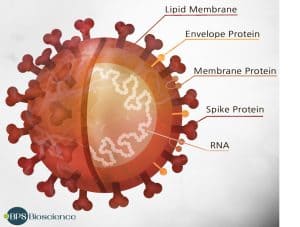
The SARS-CoV-2 coronavirus is an enveloped virus that interacts with host cells through a protruding protein called Spike and fuses with the cell membrane to inject its genome into the cell. The SARS family of coronaviruses contains a large single-stranded RNA genome of approximately 30 kb with unique and conserved characteristics compared to other coronaviruses.
The presence of a 5 ‘methylated cap and a 3’ poly-adenylated tail allows the positive-sense RNA to be translated directly by the cellular ribosome using two overlapping open reading frames (ORFs) designated ORF1a and ORF1b.
The two large translated polyproteins PP1A and PP1AB contain PLpro and 3CLpro proteases [2], which proteolytically cleave polyproteins into 16 functional components with replicas/transcriptase activity that are essential for viral replication and maturation.
The structure of the SARS-CoV-2 genome reveals a total of 14 ORFs, with occasional overlap, as commonly seen in the coronavirus family adapted from.
In fact, a unique and particularly interesting feature of viruses is the existence of alternative sequences encoding hidden accessory proteins. With alternative ORFs, the virus maximizes the efficiency of its limited genome: translation starts from a start codon within an existing gene and, being out of frame, results in a different protein product.
For example, the ORF3b coronavirus is not functional in all genomes and is not present in SARS CoV-2. Interestingly, the SARS-CoV-2 reference genome corresponding to the initial SARS-CoV-2 strain originating from Wuhan, China does not contain overlapping ORFs within ORF9a (nucleocapsid N protein), whereas the strain that rapidly displaced the original strain worldwide contains two additional accessory genes ORF9b and ORF9c embedded in the ORF9a gene. ORF9c is a 70 amino acid polypeptide, the expression of which has not yet been demonstrated.
ORF9b [P0DTD2.1] is a short 97 amino acid protein that is expressed in host cells after infection. The crystalline structure of SARS ORF9b reveals “a novel fold, a dimeric beta tent-shaped structure with an amphipathic surface and a central hydrophobic cavity that binds lipid molecules”.
Although accessory proteins do not have a known role in viral replication, they may play a role in pathogenesis [9]. ORF9b appears to be involved in the suppression of anti-viral interferon responses.
Type I interferons secreted by virus-infected cells are essential for our innate immune response and constitute the first line of defense against viral infection. Suppression of the response to interferon has been observed in patients with COVID-19. Emerging evidence now indicates that the ORF9b protein accumulates rapidly in cells of the respiratory system following SARS-CoV-2 infection, inhibiting the NF-kB pathway and subsequent interferon production, and leading to momentary and immune suppression. a delayed immune response.
More research is needed to fully decipher the role of SARS-CoV-2 accessory proteins, including ORF9b. To support such research efforts, BPS scientists have designed a tagged recombinant ORF9b protein that is highly purified and ready for use. Contact us to learn more about how we can help you achieve your research goals.


